
ANTI-COUNTERFEITING MEASURES: VALIDITY OF THE CUMULATION OF CRIMINAL FINES AND CIVIL DAMAGES APPLIED WITH PROPORTIONALITY

IMPACT : In the criminal courts, the judge may impose a criminal fine coupled with the confiscation of the profits and civil damages to the benefit of intellectual property rights holder who is a civil party to the proceedings. This is intended to compensate them for any harm suffered, and does not necessarily result in a disproportionate penalty.

The Court of Cassation thus upholds, in principle, sentences of up to 3 years’ imprisonment, a €400,000 fine, and over €600,000 in civil damages for quantities involving 315 counterfeit handbags.

  • The facts

Three individuals and a company were prosecuted for organizing a network for the manufacture and sale of luxury handbags infringing both trademark and copyright. A total of 315 counterfeit crocodile leather bags were identified.

The offences charged notably include the possession, sale, import, and export, as part of an organized group, of goods bearing a counterfeit trademark, as well as the unlawful reproduction of copyrighted artworks.

On October 4, 2023, the Paris Court of Appeal sentenced the defendants to penalties of up to 3 years’ imprisonment (including 1 year suspended) and a €400,000 fine (including €200,000 suspended), as well as the confiscation of the profits made (€70,000).

They were also held jointly liable for the payment of damages in the following amounts:

– €601,020 for the profits derived from the counterfeiting ;

– €24,040 for the loss of royalties suffered by the rights holder.

An appeal was lodged before the Supreme Court by the defendants, which resulted in the quashing of the judgment, but confirmed the principle of the cumulative imposition of sanctions.

  • The rights holder’s option between civil and criminal proceedings

The French Intellectual Property Code contains specific provisions prescribing prison sentences and fines, which may be up to 7 years’ imprisonment and €750,000 when the offences are committed by an organized group or via an online public communication network (Articles L.716-9 et seq. of the Code of Intellectual Property).

Rights holders therefore have the option to initiate proceedings either before the civil courts or the criminal courts. They generally opt for the civil jurisdiction, which is regarded as more favourable in terms of damages granted and, depending on the nature of the infringement, sometimes better at figuring out the reality of the counterfeiting.

  • The aggregation of damages and criminal fines

In this case, the plaintiffs claimed that the Court of Appeal failed to ensure that the combination of damages, which they described as punitive, and the criminal fine complied with the principle of proportionality set out in the Charter of Fundamental Rights of the European Union[1].

However, the Court dismissed the argument, justifying the amount of damages awarded by Articles L. 331-1-3 and L. 716-4-10 of the Code of Intellectual Property, which expressly provides that the prejudice must be assessed by taking into account “in particular the profits made by the infringer or the counterfeiter, including savings on intellectual, material, and promotional investments generated by the counterfeiting

The Court therefore concluded that these amounts “are solely intended to ensure effective, proportionate, and dissuasive compensation for the harm caused by the offences (…) based on objective economic criteria, while taking into account the costs incurred by the rights holder.” As such, no punitive character may be ascribed to them.

These damages may therefore be combined, without any disproportion, with criminal fines, which remain subject to the principle of proportionality set out in the Charter of Fundamental Rights of the European Union.

It may also be recalled that Directive 2004/48 on the enforcement of intellectual property rights likewise establishes a principle of proportionality with regard to remedial measures.

  • Joint and several liability for acts not personally attributed

The defendants also criticized the Court of Appeal for having held them jointly liable without establishing a causal link between the acts personally attributed to them and the harm suffered by the civil parties. However, the Supreme Court held that joint and several liability was justified by the connection and indivisibility of the offences respectively attributed to them, and found that “the fact that each of the co-perpetrators did not obtain the same benefits from the offences, between which a connection was sovereignly established, is not such as to break the causal link between the fault of each of them and the harm suffered by the civil party.”


[1] Articles 49.3 and 50 of the Charter of Fundamental Rights of the European Union
DESIGNS – THE EXCEPTION OF DISCLOSURE APPLIESWHEN THE EARLIER DESIGN PRODUCES THE SAME OVERALL IMPRESSION AS THE REGISTERED DESIGN

General Court of the European Union, March 12, 2025, T-66/24

IMPACT: Disclosure prior to the registration of a design may compromise its novelty or distinctive character, unless it falls within the disclosure exception. This exception allows prior disclosure to be disregarded if it meets two conditions:

(i) be performed by the creator or under his or her instructions;

(ii) have occurred within 12 months prior to the date of filing of the application for registration.

In this ruling, the court reaffirms that this exception may apply as soon as the previously disclosed design produces the same overall impression as the registered design, without requiring that they be strictly identical.

  • The facts

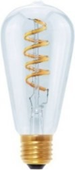
The company LIQUILEDS LIGHTING CORP (LLC) is the owner of a community design registered on January 12, 2017, in class 26.04 for “Light bulbs with light-emitting diodes,” representing a decorative LED bulb.

On March 25, 2021, the company LIDL filed an application for invalidity of this design, claiming a lack of novelty and individual character, particularly with regard to prior rights.

The company LLC considered that this earlier design should be disregarded since it benefited from the disclosure exception (Article 7(2) of Regulation No. 6/2002), whereas the applicant considered that since the prior design was not identical to the registered design, the exception could not apply.

The Court rejects this restrictive interpretation. It justifies this position by taking into account both the wording of Article 7(2) of the aforementioned Regulation, the context of the provision, and the objective pursued by the text.

  • Reminder regarding the burden of proof

In this judgment, the Court reaffirms that it is for the applicant to demonstrate that the contested design does not meet the conditions for protection.

It was therefore up to the applicant to prove that the design was preceded by a disclosure to the public, which, according to the Court, was proven.

It was only once this evidence had been provided that the holder of the DM had to demonstrate that it benefited from the disclosure exception set out in Article 7(2) of the Regulation.

  • Prior disclosure of a design may benefit from the disclosure exception if it produces the same overall impression as the registered design

As a reminder, Article 7(2) of the Regulation establishes a 12-month grace period during which the creator, or any right holder or authorized third party, may disclose their design without being subject to a claim of lack of novelty or individual character.

In order to be registered, the design must:

– be new: no identical design must have been disclosed to the public prior to the filing date (Article 5 of the Regulation);

– have individual character: the overall impression it produces must be different from earlier designs (Article 6 of the Regulation).

In this particular case, the owner of the design demonstrated that the prior right had been invoked by him within the grace period, meaning that it could not be used against him to invalidate his design.

However, the company LIDL maintained that the disclosure exception could not apply since, in its view, the prior art was not identical to the registered design.

The Court decided to reject this interpretation of Article 7(2) of the Regulation, ruling that it is not necessary for the prior design invoked in the context of the disclosure defense to be identical to the registered design; it is sufficient that it produces the same overall impression.

The Court bases its reasoning in particular on the objective of the Regulation, which is to “encourages innovation and development of new products and investment in their production” (Recital 7).

Therefore, requiring strict identity between the disclosed design and the registered design would be contrary to this logic by preventing creators from testing their designs on the market and making adjustments if necessary before registering them.

This decision is upheld by the new Regulation No. 2024/2822, which came into force on May 1, and which states that ” A disclosure shall not be taken into consideration […] if the disclosed design, which is identical with or does not differ in its overall impression from the design for which protection is claimed under a registered EU design, has been made available to the public. ”

Newsletter

Subscribe to our newsletter to be informed of our news

Privacy Overview

This website uses cookies so that we can provide you with the best user experience possible. Cookie information is stored in your browser and performs functions such as recognising you when you return to our website and helping our team to understand which sections of the website you find most interesting and useful.